






































Australia’s strategic planners have spent years talking about autonomous weapons, sovereign industry and readiness as things the country would eventually need. A new analysis from the Australian Strategic Policy Institute argues that the eventually has arrived, and that treating these capabilities as aspirations rather than requirements is now a risk in itself.
The piece, published on ASPI’s Strategist, frames the current period as a genuine inflection point for the Australian Defence Force. Its central contention is that three ideas which are often invoked separately, autonomy, sovereignty and readiness, only deliver strategic weight when they are pursued together. An autonomous system built entirely on foreign technology does not make Australia more self-reliant. A sovereign capability that cannot be fielded quickly does not deter anyone. Readiness without domestic control simply leaves the country dependent on supply chains it does not command.
Why subsea cables sharpened the argument
The analysis opens with a threat that is unusually tangible for a strategic essay. At the Shangri-La Dialogue in Singapore in May, Defence Minister Richard Marles described attacks on global subsea cable infrastructure as historically unprecedented in their scale and frequency. Since November 2024, vessels have severed fibre optic cables in several parts of the world, disrupting the physical arteries that carry the overwhelming majority of international internet traffic and financial transactions.
For a country positioned the way Australia is, that trend is not abstract. The nation sits at the end of long undersea routes that connect it to Asia, the United States and Europe, and those cables carry almost all of the data that keeps the economy, the banking system and defence communications running. An adversary does not need to fire a shot to cause serious harm. It needs only to drag an anchor across the seabed in the right place. ASPI’s point is that resilience against this kind of grey-zone pressure cannot be bought off the shelf at short notice, which is precisely why sovereign capability and autonomous monitoring matter now rather than later.
The case for building at home
The sovereignty thread running through the analysis reflects a longstanding ASPI position, and it lands in the middle of an active national debate. Australia has committed enormous sums to AUKUS and to a broader uplift in defence spending, yet much of the advanced technology involved is designed and manufactured overseas. The argument is not that Australia should try to build everything itself, which would be neither realistic nor affordable, but that it needs to control the parts that determine whether a capability can be maintained, upgraded and used without asking permission.
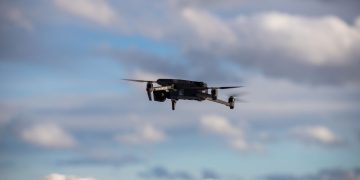
Autonomous and uncrewed systems sit at the heart of that calculation. Drones, uncrewed surface and underwater vessels, and the artificial intelligence that directs them are increasingly seen as the way a middle power can generate mass without matching a larger rival plane for plane or ship for ship. The catch is that autonomy is only as trustworthy as the software and data pipelines behind it. If the algorithms, the training data and the ability to patch them all reside offshore, then the promise of self-reliance is thinner than it looks.
Two ways to read the moment
Not everyone reads the situation with the same urgency, and the debate is worth setting out honestly. The view ASPI advances is that the strategic environment has deteriorated faster than Australia’s ability to respond, and that the country should accept more risk in procurement to field capabilities sooner, backing local industry even where that means paying more or accepting less mature technology at first.
A more cautious camp within defence and industry circles worries about exactly that trade-off. Rushing to build sovereign systems can lock in immature technology, duplicate what allies already do well, and stretch a workforce that is already short of engineers, data specialists and cleared personnel. From this perspective, deep integration with the United States and the United Kingdom through AUKUS is the smarter path, and the more sensible sovereignty is the ability to sustain and adapt allied systems rather than reinvent them. The tension between those two readings, move fast and build local versus integrate deeply and specialise, is the real argument beneath the essay, and it will not be settled by a single analysis.
What it means for Australia
For Australian readers the stakes are concrete and close to home. The same sovereign AI and autonomy questions playing out in defence are echoing across the civilian economy, where governments and companies are wrestling with how much of their technology stack should sit on domestic soil. The push for sovereign large language models, local data centres and Australian control over critical infrastructure is part of the same conversation, and defence is where the consequences of getting it wrong are least forgiving.
There is an industrial opportunity buried in the risk. A defence sector that genuinely invests in home-grown autonomy would pull demand towards Australian robotics firms, AI startups, universities and the manufacturing base that supports them. That is the kind of anchor customer local technology companies have long said they need, and it could help keep skilled workers and intellectual property onshore rather than watching both drift overseas. Realising that upside depends on procurement that is willing to back unproven local suppliers, which has historically been one of the hardest cultural shifts for the Department of Defence to make.
What’s next
The immediate test is whether the government’s stated ambitions translate into contracts, standards and timelines that reach Australian industry. Watch for how the next tranche of defence investment treats uncrewed and autonomous systems, whether protection of subsea cable infrastructure earns dedicated funding and doctrine, and how the workforce pipeline is expanded to supply the engineers these programs demand. ASPI’s contribution is to insist that autonomy, sovereignty and readiness be judged as a single package, because a capability that is strong on one measure and weak on the others may look impressive on paper while failing to deter anyone in practice.
The subsea cable warning gives the argument its edge. If the disruptions Marles described continue to spread, the question of whether Australia can see, defend and recover on its own terms stops being a matter for essays and becomes a matter for the next crisis.
Sources: ASPI Strategist