































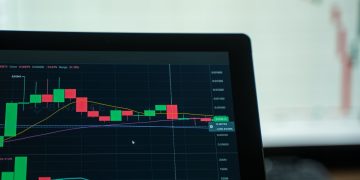




The Australian sharemarket spent Monday on the back foot, a quiet but telling session in which two very different anxieties pulled in the same direction. On one side sat geopolitics, with conflict abroad pushing oil prices higher and keeping traders wary of any fresh shock. On the other sat something closer to home for anyone who follows technology: a growing unease that the valuations attached to artificial intelligence companies have climbed further than the underlying earnings can justify.
According to the ABC’s markets coverage, the benchmark index edged lower through the day as those crosscurrents kept buyers cautious. It was not a rout, and it was not a panic. It was the kind of grinding, sideways-to-down session that tends to arrive when investors cannot decide whether to worry more about the world burning or about the tech trade cooling. Both were on the table at once.
The news: a market caught between two fears
Oil doing the heavy lifting on the upside is a familiar pattern when the Middle East and other flashpoints flare. Higher crude feeds through to energy producers listed in Sydney, which is why the local resources and energy names often hold up while the broader index sags. That divergence was visible again, with the war premium in oil offering a partial cushion even as the rest of the board struggled.
The AI worry is newer, and arguably more interesting for readers of a site like this one. For the better part of two years, the global rally has been carried by a relatively small cluster of companies tied to artificial intelligence, from the chipmakers supplying the hardware to the hyperscalers building the data centres and the software firms promising to weave the technology into everything. When sentiment around that story wobbles offshore, it ripples through to Australian screens quickly, because so much of the local market’s mood is imported from Wall Street overnight.
What makes this particular bout of nerves notable is that it is no longer confined to sceptical commentators. The question of whether AI valuations have overshot has moved into the mainstream of market conversation, sitting alongside interest rates and geopolitics as a standing item on the worry list.
Two ways to read the wobble
There are, broadly, two camps. The first sees sessions like Monday’s as healthy. On this view, a market that pauses to question its own assumptions is a market doing its job. Valuations that price in years of flawless execution deserve to be poked, and a bit of doubt now is cheaper than a violent correction later. Adherents point out that the underlying demand for computing power is real, that enterprises are genuinely rewiring their operations, and that a repricing of the froth need not derail the substance.
The second camp is less sanguine. It worries that so much of the market’s gains have been concentrated in AI-linked names that any serious loss of faith could drag the whole index down with it, regardless of how the rest of the economy is faring. If a handful of stocks are doing most of the work, the argument runs, then the whole edifice is more fragile than the headline numbers suggest. Add a live geopolitical risk and rising energy costs, and you have the ingredients for a sharper move than a quiet Monday would imply.
Both readings have been circulating in Australian financial circles for months. Commonwealth Bank chief economist Luke Yeaman has publicly played down the bubble talk, framing the AI build-out as a durable investment cycle rather than a mania waiting to pop. Others in the local commentariat have been blunter about the risks, warning that the boom may not be quite what it seems once the accounting and the electricity bills are laid bare. The truth, as usual, is probably somewhere in the messy middle, which is exactly why the market keeps lurching between the two.
What it means for Australia
For local investors, the exposure is more direct than it might first appear. The AI trade is not just an American story that Australians watch from a distance. Superannuation funds, which hold the retirement savings of millions of Australians, have significant offshore allocations weighted heavily toward the same US technology giants driving the global rally. When those names wobble, the effect flows through to balances here, even if it never shows up as a dramatic headline on the ASX itself.
Closer to home, a wave of capital has been pouring into the physical backbone of artificial intelligence. Data centre operators and infrastructure players listed in Sydney have been among the market’s more energetic movers, riding investor enthusiasm for anything that touches the AI supply chain. That enthusiasm cuts both ways. If global sentiment sours on AI valuations, the local names that have rallied hardest on the same thesis are the ones most exposed to a change of heart. The land grab for data centre sites, the strain on the power grid, and the rush to list AI-adjacent businesses have all been running hot on the assumption that demand only goes one way.
There is also the energy angle, which is where Monday’s two fears intersect neatly for Australia. Higher oil prices lift the local energy sector, but they also raise input costs across the economy at a time when data centres are already adding meaningfully to electricity demand. A country trying to power an AI build-out while managing an energy transition does not need a war premium on fuel making the sums harder. The same session that rewarded oil producers quietly raised the cost of the very infrastructure the AI story depends on.
What’s next
None of this resolves in a single trading day. The near-term direction will be set offshore, by whatever the next batch of results from the big US technology companies reveals about whether the AI spending is translating into profit, and by whether the geopolitical situation escalates or eases. Locally, the Reserve Bank’s path on interest rates remains the other great variable, since cheaper money has been part of what has let lofty valuations breathe.
For now, the message from Monday is one of caution rather than alarm. The market has not decided that the AI story is broken. It has simply started to ask harder questions, and to do so while keeping one eye on the wider world. For Australian investors and for the local companies betting their futures on the technology, that scrutiny is worth watching closely, because the moment sentiment turns is rarely announced in advance.
Sources: ABC News, Technology.


