

















































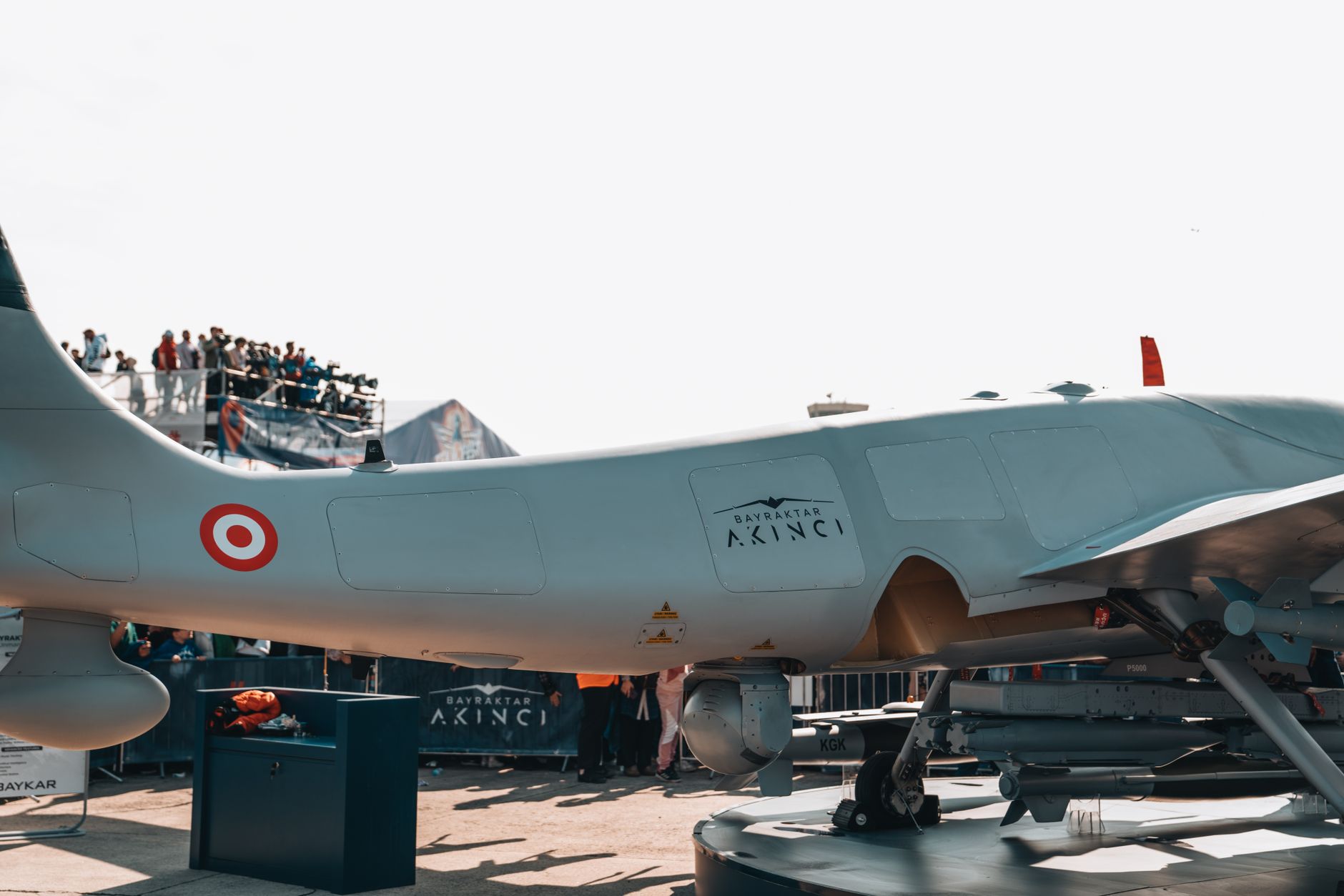
The character of war is changing, and artificial intelligence sits at the centre of the shift. What began as a collection of research projects and battlefield experiments has become a defining feature of how modern militaries plan, target and fight. As The Australian reports, AI is transforming wartime technology at a speed that is forcing governments, including ours, to rethink long-held assumptions about how conflicts are won and lost.
From the lab to the front line
For much of the past decade, military AI lived mostly in slide decks and procurement roadmaps. The war in Ukraine changed that. Cheap commercial drones, repurposed and swarmed in their thousands, have destroyed tanks worth millions of dollars and shown that software-driven precision can matter more than the size of a platform. Machine vision now helps identify targets, automated systems help sift through oceans of surveillance footage, and loitering munitions can hunt for their own targets with limited human input once launched.
The appeal to defence planners is obvious. AI promises to compress the time between spotting a threat and responding to it, to stretch small forces across larger areas, and to make expensive human expertise go further. The same technology that recommends a film or flags a fraudulent transaction can, in a military context, triage intelligence and prioritise targets at a pace no human staff officer could match. That is why the United States, China and a long list of middle powers are pouring money into autonomy, and why the private sector has muscled its way into a market once dominated by a handful of traditional primes.
The case for speed
Supporters of rapid adoption argue that hesitation is its own risk. In their view, a military that clings to crewed platforms and manual processes while rivals field cheap, attritable and increasingly autonomous systems is choosing to fall behind. The economics reinforce the point: a drone that costs a few thousand dollars can threaten a warship or an armoured vehicle that costs orders of magnitude more, so the side that masters large numbers of smart, low-cost systems gains an advantage that is hard to ignore.
This camp also points to the defensive upside. AI can help shoot down incoming drones and missiles, detect cyber intrusions in real time, and keep logistics moving when supply chains come under pressure. Framed this way, declining to invest looks less like caution and more like unilateral disarmament against adversaries who feel no such restraint.
The case for caution
The counterargument is just as forceful. Ethicists, legal scholars and a sizeable bloc within the defence community warn that handing lethal decisions to machines raises profound questions of accountability. If an autonomous system strikes the wrong target, who is responsible: the operator, the commander, the manufacturer or the algorithm itself? International humanitarian law was written for human judgement, and critics argue it is dangerously unclear how principles like distinction and proportionality survive when the trigger is pulled by code.
There are practical worries too. AI systems can be brittle, fooled by adversarial inputs, or confidently wrong in ways that are hard to predict. In the compressed timelines of combat, an error made at machine speed can escalate faster than any human can intervene. These concerns have driven years of debate at the United Nations over whether so-called lethal autonomous weapons should be restricted or banned outright, a discussion that has produced plenty of statements but little binding regulation.
What it means for Australia
For Australia, this is not an abstract debate happening somewhere else. Defence is in the middle of its largest reshaping in a generation, with the AUKUS partnership built around nuclear-powered submarines in its first pillar and advanced capabilities, including autonomy, undersea drones and AI, in its second. The 2024 National Defence Strategy and the broader push toward a focused force have put a premium on exactly the kinds of asymmetric, technology-led capabilities that AI underpins.
Home-grown programs reflect the trend. Boeing’s MQ-28 Ghost Bat, developed in Australia, is designed to fly alongside crewed aircraft as a loyal wingman, taking on risky missions and extending the reach of pilots. A growing local ecosystem of defence technology firms is pitching autonomous maritime and aerial systems to Canberra, and the government has signalled it wants more of this work done onshore to shore up sovereign capability. The strategic logic is that a country with a small population and a vast area to defend benefits enormously from systems that multiply the effect of every person in uniform.
Yet Australia faces the same tensions as everyone else, with sharper edges. It must move fast enough to stay relevant to allies and credible to potential adversaries, while building the ethical and legal guardrails that a liberal democracy expects. It must grow a defence industrial base capable of producing software-defined systems at scale, when much of the country’s AI talent is drawn to better-paid commercial roles. And it has to navigate its dependence on American technology and supply chains at a moment when the reliability of those partnerships is itself a live political question.
What’s next
Expect the pace to accelerate rather than ease. Defence budgets around the world are tilting toward autonomy, and the lessons of Ukraine and the Middle East are being absorbed into doctrine in real time. The harder work will be governance: agreeing what level of human control is required before a system can use force, how these capabilities are tested and certified, and how allies share standards so their systems can operate together without tripping over one another.
For Australia, the coming decisions will shape not just the shopping list but the posture. Choices made now about which systems to build locally, which to buy from allies and where to draw the ethical lines will echo for decades. The technology is arriving whether policymakers are ready or not, and the task is to ensure the rules, the skills and the industry mature alongside it rather than trailing behind. On the evidence so far, that is a race against the clock.
Sources: The Australian