

















































The wealth of Google’s founders tends to move in lockstep with a single line on a stockmarket chart, and that line has been climbing. A rally in Alphabet shares has added roughly US$15 billion to the combined paper fortunes of Larry Page and Sergey Brin, according to Forbes Australia, with much of the investor enthusiasm pinned to reports that the company’s parent has developed a new artificial intelligence chip said to be up to ten times more energy-efficient than what came before.
For most readers the billionaire arithmetic is the least interesting part of the story. The two founders stepped back from day-to-day management years ago, but they retain the special-class shares that keep them firmly in control of the company, so any lift in Alphabet’s market value flows almost mechanically to their net worth. The number is eye-catching precisely because it is passive. What sits underneath it, though, is a genuine shift in how the AI industry is thinking about the cost of running these systems, and that is where the story starts to matter well beyond Silicon Valley.
The chip behind the rally
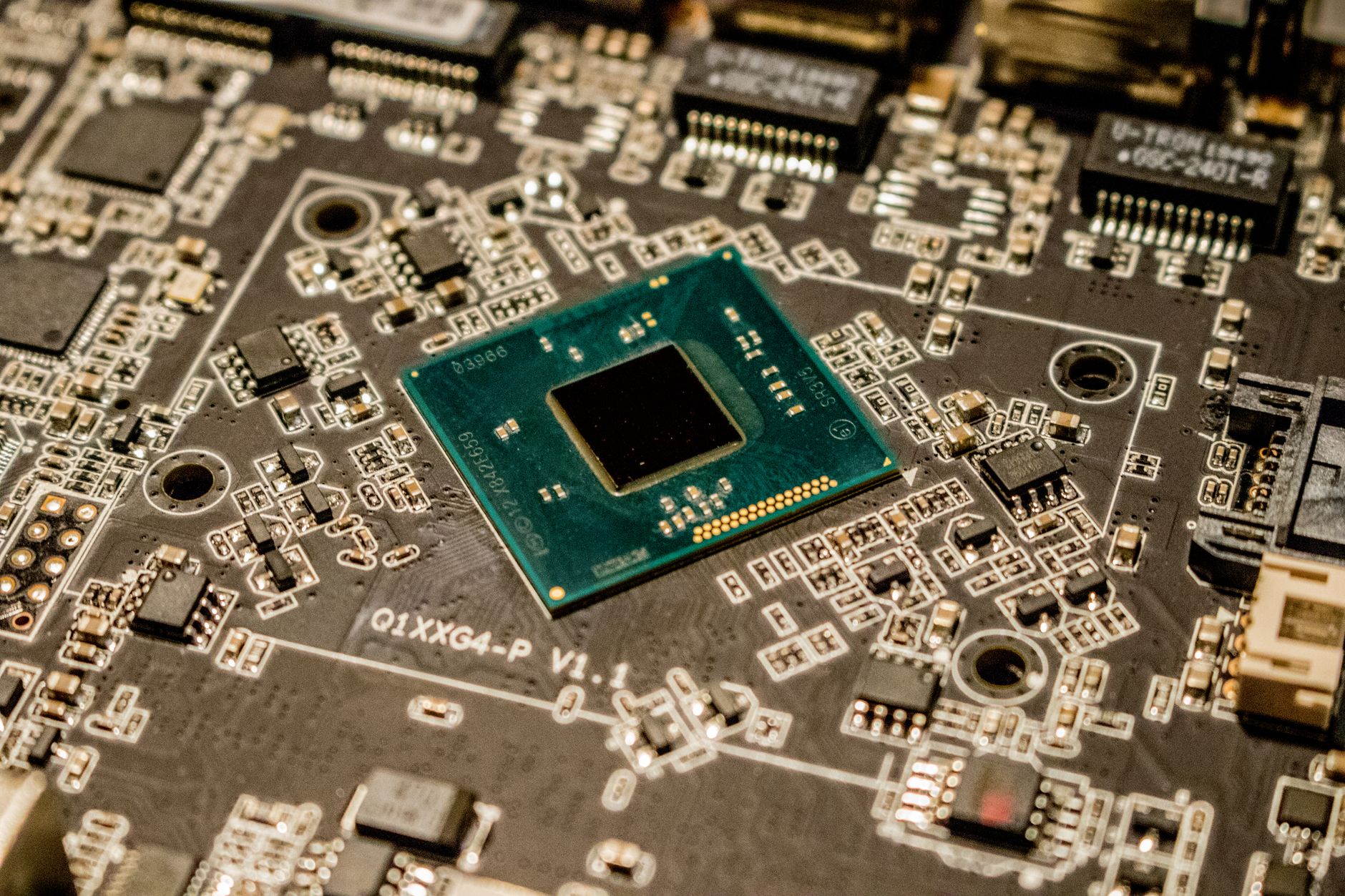
The efficiency claim points squarely at Google’s custom silicon programme. For close to a decade the company has designed its own Tensor Processing Units, chips built specifically to train and run machine-learning models rather than the general-purpose graphics processors that Nvidia sells. Each new generation has chased the same two targets: more raw performance, and more work done per watt of electricity. A chip that delivers a large jump in efficiency is significant because energy, not just the price of the hardware, has become the binding constraint on how big AI can get.
Investors read the news as a sign that Google can lean harder on its own hardware instead of paying Nvidia’s premium prices, and that it can keep expanding its AI services without the electricity bill spiralling out of control. That is a compelling narrative for a company that runs some of the largest data centres on the planet and has committed to spending tens of billions of dollars a year on infrastructure. If each server can do far more computation for the same power draw, the economics of the whole build-out improve.
Two ways to read it
The optimistic case is straightforward. Efficiency gains compound. A chip that uses a fraction of the energy for the same task lowers the running cost of every query, every model training run and every new AI feature, which in turn makes it easier to justify offering those features cheaply or free. It also loosens Google’s dependence on a single external supplier at a moment when Nvidia’s chips are scarce and expensive. Analysts who follow the sector have long argued that owning the silicon is one of the few durable advantages left in a market where the underlying models are increasingly interchangeable.
The sceptical case is worth holding alongside it. Vendor efficiency figures are notoriously slippery, and a headline multiple like “ten times” almost always describes a carefully chosen benchmark rather than a real-world workload. Even if the number holds up, history suggests that efficiency rarely reduces total energy use. It tends instead to unlock more demand, a pattern economists call the rebound effect. Cheaper computation invites more computation. A chip that is ten times more efficient may simply mean a company runs ten times as many models, leaving the aggregate power draw flat or higher. There is also the broader question of whether the market’s excitement about AI hardware has run ahead of the profits, a nervousness that has already rippled through valuations this year.
What it means for Australia
Australia does not design frontier AI chips, but it is very much on the receiving end of decisions made about them, and this one lands on a live domestic nerve. The country is in the middle of a data centre boom, with operators racing to build the facilities that will host AI workloads for the region. Those facilities are enormous consumers of electricity and water, and the strain they place on the grid has become one of the defining infrastructure debates of the moment. Communities near proposed sites, energy regulators and state governments are all wrestling with how much new load the network can absorb without pushing up prices or delaying the shift to renewables.
A meaningful jump in chip efficiency changes that calculation, at least on paper. Hardware that does more per watt could ease the pressure on local grids, or it could accelerate the very build-out that is causing the pressure, depending on how operators choose to use the headroom. Either way, the efficiency of the silicon inside these buildings is no longer an abstract engineering detail for Australia. It feeds directly into how many data centres get approved, how quickly, and at what cost to households competing for the same electrons.
There is a sovereignty dimension too. Much of the debate in Canberra and in industry has centred on whether Australia is building genuine AI capability or merely hosting infrastructure owned and controlled offshore. The more the economics of AI are dictated by proprietary chips designed in the United States, the sharper that question becomes. If Google’s own hardware becomes a decisive advantage, the businesses and governments that rely on its cloud services inherit both the benefits and the dependency.
What’s next
The immediate test is whether the efficiency claims survive contact with independent benchmarking and real customer workloads, rather than the controlled demonstrations that tend to accompany a launch. Watch, too, for how Alphabet talks about capital spending at its next results, because a more efficient chip should eventually show up as either lower costs or a larger build-out, and the choice it makes will signal how the company reads the AI market. For Nvidia, a credible in-house rival at one of its biggest customers is a competitive shot worth taking seriously, even if the two are likely to coexist for years yet.
For Australian readers the through-line is simple enough. The number that moved the founders’ fortunes is a sideshow. The efficiency of the chips going into the data centres now rising across the country is the part that will actually shape power bills, planning fights and the nation’s place in the AI supply chain.
Sources: Forbes Australia.