






















Nature film-making has always been a contest between what a camera can reach and what an audience wants to see. Some of the most compelling moments in the natural world happen in places no lens can follow: the pitch-black chamber at the bottom of a burrow, the split second a predator strikes, the slow architecture of a web being spun in the dark. For decades the answer has been patience, specialist rigs and, occasionally, a bit of clever staging. Now a new answer has arrived, and it is dividing the people who make and watch documentaries.
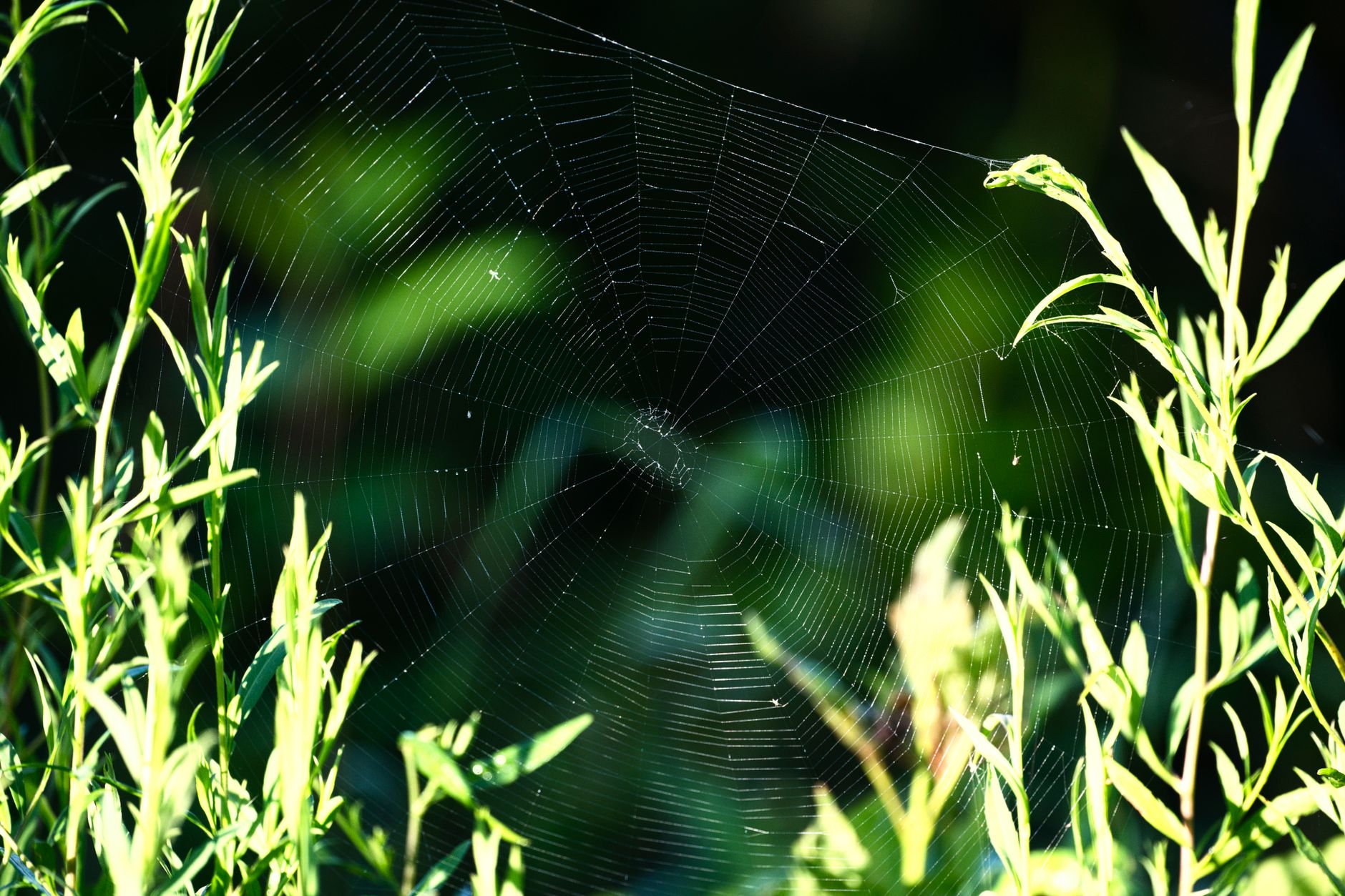
The Guardian this week profiled an Australian film-maker who reached for generative artificial intelligence to build a documentary that, by conventional means, could not have been filmed at all. The subject was a spider and the world it lives in, a subterranean lair that resists the usual tricks of the trade. Rather than abandon the idea, the film-maker used AI image and video tools to picture scenes that a camera simply could not capture, stitching synthetic sequences together with real footage to tell a story about a creature most of us would rather not meet in the flesh.
The news, and why it lands differently here
On its face this is a story about one small, inventive project. In practice it is a test case for a question the entire screen industry is circling: when is it acceptable to show an audience something that never happened in front of a camera, and how honest do you have to be about it? Documentary carries an implicit promise. The images are supposed to be a record of the real, gathered rather than generated. Wildlife documentary leans on that promise more heavily than most, because the whole appeal is the privilege of seeing something true that you would never otherwise witness.
Generative tools complicate that promise without necessarily breaking it. A film-maker who uses AI to visualise the inside of a burrow is not inventing the spider or lying about its behaviour. They are doing what illustrators, animators and visual-effects artists have long done for natural history programming, only faster and far more cheaply. The difference is that the output can look indistinguishable from photographed reality, which is exactly what makes disclosure the heart of the matter. An animated cutaway announces itself as a reconstruction. A photorealistic AI sequence does not, unless the maker chooses to say so.
Two ways of seeing it
Supporters of this kind of experimentation make a straightforward case. Independent film-makers do not have the budgets of the big natural-history units, and specialist wildlife cinematography can cost more than an entire small production. If a solo maker can use AI to realise a vision that would otherwise stay locked in their head, that is a democratisation of a craft that has long been the preserve of well-funded institutions. The counterargument is not that the technology is evil, but that it should be labelled as clearly as a dramatic reconstruction on a true-crime show, so viewers keep the ability to tell what was witnessed from what was imagined.
Critics come at it from a different angle. Many working artists, photographers and cinematographers argue that the generative models doing this work were trained on their images without permission or payment, which turns every impressive AI sequence into a quiet act of appropriation. That grievance sits at the centre of a broader fight over copyright and consent that has become one of the defining tensions of the AI era. For a natural-history sector built on the labour of people who spend weeks in a hide waiting for a single shot, the idea that a model can approximate their work in seconds is not a neutral convenience. It is a threat to livelihoods and to the value of the real thing.
The Australian stakes
Australia has an outsized interest in how this shakes out. The country is a natural-history powerhouse, home to production houses, cinematographers and post-production talent whose work sells around the world, and to a landscape full of the strange and photogenic creatures that anchor the genre. Spiders are practically a national brand. When an Australian maker demonstrates that AI can stand in for footage that used to demand enormous skill and expense, it changes the economics for everyone downstream, from the freelance camera operator to the sound recordist to the small studio pitching to international broadcasters.
It also collides with a policy conversation that is already well underway here. The federal government has been weighing how far to go in regulating AI, and creators have been pushing hard for a seat at the table as those rules take shape, worried that Australian work is being used to train systems that will then compete with them. Screen bodies and rights holders have argued that any national framework needs enforceable rules on training data, consent and transparency, not just voluntary good intentions. A documentary that openly uses AI to fill in what a camera cannot reach becomes a useful, real-world illustration of exactly what those rules would need to cover.
There is a reputational dimension too. Australian nature content trades on credibility. Broadcasters and streamers buy it because audiences trust that what they are seeing is genuine. If synthetic imagery seeps into the genre without clear standards for disclosure, the risk is a slow erosion of that trust, which would hurt the honest makers most of all. The upside, handled well, is a set of new tools that let Australian storytellers tackle subjects and perspectives that were previously out of reach, provided they are candid about how the images were made.
What’s next
Expect the disclosure question to move from individual choice toward industry standard. Festivals, broadcasters and funding bodies will increasingly be asked to define where AI-assisted imagery is welcome, where it must be labelled, and where it has no place at all. Professional guilds will keep pressing for training-data transparency and fair compensation, and those demands will feed directly into whatever the government eventually legislates. The spider film is a small production, but the argument it has surfaced is a large one, and Australia, with its rich natural-history tradition and its unfinished AI rulebook, is unusually well placed to help decide the answer.
For now, the lesson is less about the technology than about honesty. Audiences have shown they can accept reconstructions, animation and visual effects when they are told what they are looking at. The question the industry has to settle is whether a photorealistic AI sequence deserves the same courtesy, and most of the people who care about the craft think it plainly does.
Sources: The Guardian.