
















































A little-known Chinese startup has once again reminded the world that the frontier of artificial intelligence is no longer the exclusive preserve of Silicon Valley. Moonshot AI, the Beijing outfit behind the Kimi chatbot, has released Kimi K3, a model it is describing as the largest open-source system yet built, and the announcement has been enough to send a ripple of unease through global markets already jittery about stretched technology valuations.
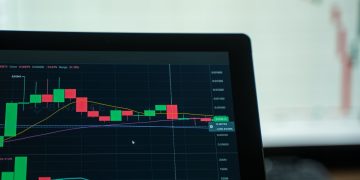
For anyone who lived through the DeepSeek shock in early 2025, the pattern will feel familiar. A Chinese lab ships a powerful model, releases the weights for anyone to download and build on, and investors who have poured billions into the assumption that leading-edge AI requires American chips and American capital are left to reassess. According to the International Business Times Australia, the K3 release rattled global markets as traders weighed what a genuinely open, top-tier model does to the pricing power of the big commercial labs.
What Moonshot has released
Moonshot AI has built its reputation on long-context reasoning and on making capable models freely available rather than locking them behind an expensive interface. Kimi, its consumer assistant, became one of the most talked-about products in the Chinese market on the strength of its ability to digest enormous documents in a single pass. Kimi K3 extends that lineage, and the claim that it is the world’s largest open-source model is the part that has grabbed attention. Size, measured in parameters, is a crude proxy for capability, but an open release at the top end of the scale changes the economics for everyone downstream.
The significance is less about any single benchmark and more about access. When the weights of a frontier-class model are published, a developer in Adelaide or a bank in Sydney can run it on their own infrastructure, fine-tune it for a narrow task, and never send a byte of data to a foreign vendor. That is a very different proposition to renting capacity from a closed provider, and it is precisely why open releases from Chinese labs have become such a lightning rod.
Two ways to read the news
The optimistic reading is that open models are a gift to the broader ecosystem. Every time a lab publishes weights that rival the closed leaders, the cost of building useful AI products falls, competition intensifies, and smaller players who could never afford to train a model from scratch suddenly have a serious tool to work with. On this view, Kimi K3 is good news for anyone who wants AI to be a commodity input rather than a rationed luxury, and the market wobble is just the sound of incumbents losing a little pricing power.
The wary reading is harder to dismiss. A powerful open model developed under Chinese jurisdiction raises questions that Australian policymakers have been circling for the better part of a year. Where does the training data come from, what values are baked into the model’s responses, and what happens when critical services quietly come to depend on infrastructure that originates in a strategic rival? These are not hypothetical concerns in Canberra, where the conversation about national security and AI has already broadened well beyond a single country. Openness cuts both ways: it lowers the barrier for good actors and bad ones alike, and it makes provenance almost impossible to police once the weights are loose.
What it means for Australia
Australia has spent the past year trying to work out whether it is building AI or merely hosting it, and a release like Kimi K3 lands squarely on that fault line. On the demand side, cheaper and more capable open models are a genuine boon. A great deal of the local activity, from council pilots to enterprise deployments inside the big banks, runs on the assumption that the underlying models will keep getting better and cheaper. An open release at the frontier accelerates exactly that, and it hands sovereign-minded organisations a way to keep sensitive data onshore while still tapping into leading capability.
On the supply side, the picture is more uncomfortable. Australia does not have a domestic lab producing models at this scale, and every leap by Moonshot, DeepSeek or Zhipu widens the gap between the countries that build frontier systems and those that consume them. The nation’s newly stood-up AI office, its data-centre boom and its debates about sovereign capability all orbit the same anxiety: that Australia risks becoming a sophisticated buyer of other people’s intelligence rather than a producer of its own. A Chinese open model that anyone can download for free makes the economic case for a local frontier effort even harder to argue, because why fund something at enormous cost when a capable substitute is available for nothing?
There is also a governance dimension that sits close to home. Regulators here are already tightening the rules around automated decision-making in government services, and the prospect of agencies or contractors quietly adopting a foreign open model to save money is exactly the kind of shadow deployment that keeps security officials awake. The convenience of a free, powerful model is real, and so is the temptation to skip the due diligence.
What happens next
The immediate question is how the closed labs respond. When DeepSeek forced a rethink last year, the American incumbents answered with sharper pricing and faster release cycles, and a similar dynamic is likely again. Expect the next few weeks to bring independent benchmarking of Kimi K3 as researchers around the world put the claims to the test, because a headline about being the largest open model means little until the community verifies what it can actually do.
For Australia, the more durable question is strategic rather than technical. The country now has the institutions to have a serious conversation about sovereign AI, but it has yet to settle on what it actually wants: to build, to buy, or to broker. Each new open release from China sharpens that choice and shortens the window in which it can be deferred. Kimi K3 will not be the last model to rattle markets, and the local response cannot keep being surprise.
Sources: International Business Times Australia.